
"coffee bean development"
30000 article(s) found

What is the main impact of the three waves in the development of coffee products
Another argument about the main impact of the three waves of coffee product development is that in the mid-13th century there was a Muslim named Sheikh Omar who was suspected of having witchcraft and was exiled to the Mocha region of Yemen, a desert region. He was out of food and water. He happened to see a bird nibbling on the red fruit of coffee. He also went to taste it. It didn't taste very good.

Introduction to the planting History and Development of Costa Rican Coffee
Coffee is an important economic source of Costa Rica. It was introduced in 1808 and has been cultivated for 200 years. Costa Rica has 1x3 population invested in newly developed villa sarchi, newly developed villa sarchi and coffee-related industries. Colombians say that coffee has changed the country and enjoyed a rich environment, and coffee has indeed made an outstanding contribution.

Yunnan coffee development history Arabica coffee beans cultivation environment Production area Manor introduction
Yunnan coffee development history Arabica coffee beans cultivation environment production area manor introduction Yunnan coffee trade base In recent years, Yunnan Arabica coffee export trade volume continued to grow, January to September 2010, the province's coffee exports 28,800 tons, exports earned 85,840,000 US dollars 121. Coffee raw beans and deep-processed products are exported to Western Europe, the United States, Japan, South Korea and other more than 20 countries and regions. currently

The development and change of coffee!
1. Macro-environmental analysis with the development of the times and the further change of people's concept of life, the coffee industry is also developing at a rapid speed. The promotion of urbanization and the construction of culture are the driving force for the development of coffee shops. Government policy support for college students to start a business. With the popularity of coffee culture and the rise of petty bourgeoisie sentiment, coffee shops are becoming one of the ways for people to communicate and enjoy themselves.

The development and change of coffee!
1. Macro-environmental analysis with the development of the times and the further change of people's concept of life, the coffee industry is also developing at a rapid speed. The promotion of urbanization and the construction of culture are the driving force for the development of coffee shops. Government policy support for college students to start a business. With the popularity of coffee culture and the rise of petty bourgeoisie sentiment, coffee shops are becoming one of the ways for people to communicate and enjoy themselves.
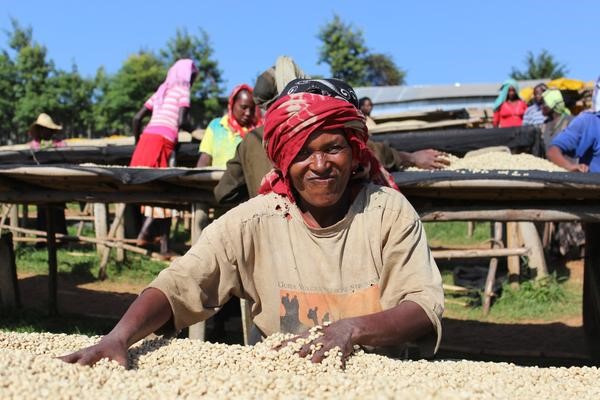
Coffee producing areas in Ethiopia, a new trend of boutique development from cooperatives to single small farmers
Professional coffee knowledge exchange more coffee bean information please follow the coffee workshop (Wechat official account cafe_style) Ethiopia Yega Xuefei producing area reputation has become so popular, even Xiao 7 coffee has begun to use it, the details should not be introduced by the editor. However, there is a new trend in the Yega Xuefei system, that is, the development of a single small farmer and a single agricultural product.

Australian Coffee Island Coffee Development of Foreign Coffee Coffee Raw Bean Merchant Coffee with beans
Boutique coffee is fresh coffee. Whether it's food or drink, of course, the fresh the better, and so is boutique coffee. High-quality coffee should keep the coffee beans fresh before making, including the preservation of baked beans, and grind the coffee beans into powder before making, which is also to retain its original and best flavor. And the way of making hand-made coffee is such a way to make high-quality coffee.

Yemeni mocha coffee history, culture, characteristics, industry development
Yemeni coffee, a well-known coffee named after a port in Yemen. The most familiar mocha coffee. When the word appears on the recipes of bags and cafes, the meaning is different. The former refers to the port where coffee beans are exported, while the latter refers to a kind of coffee. Strictly speaking, coffee beans exported from the port of Mocha in Yemen can be called mocha coffee. Later, the port

History of Coffee Cultivation in China--Cultural Introduction of Origin and Development
The history of coffee cultivation in China--
Coffee planting History of Coffee introduction and expansion in China in the early stage (5)
1. From the first peak period of the development of China's coffee industry (1952-1961) to the late 1940s, according to recorded figures, there are 2173.33 hectares of rubber plantations in Hainan Island, with a total of 867600 rubber trees, with an annual output of 199,000 tons of dry rubber, and more than 300,000 coffee plants. the annual output of coffee beans is 1 ton. According to a survey in the early 1950s, there was a large amount of coffee left in Fushan area of Chengmai County, with a total of 70,000.

Introduction to the Development of Coffee in Chiang Mai, Thailand description of the flavor of coffee beans treated with Qingmai honey in Thailand
Professional baristas please follow the coffee workshop (Wechat official account cafe_style) Coffee Story in Chiang Mai, Thailand, located in Chiang Mai in northern Thailand, is one of the popular tourist hotspots in recent years. What tourists like is not only the Buddhist temples with rich history and beautiful scenery, but also the product of the local leisurely life culture-coffee. Based on the proximity of Thailand's second largest city

The development of coffee beans in Indonesia
The chairman of the Indonesian Special Coffee Association (SCAI), one of the high-quality coffee institutions in Indonesia, gave a brief overview of the export coffee business. Indonesia's total exports grew by an average of 50-20% a year from 2000 to 2009, until it became the third largest coffee manufacturer in the world. Robasta coffee accounted for about 70% of the total exports, because the earliest

Nestle Coffee Center lays foundation in Pu 'er, Yunnan, China
(Yunnan, March 9, 2015) The large-scale project of Nescafe Center in Pu 'er Industrial Park officially broke ground today, which will greatly enhance the ability to provide training and technical support for coffee farmers and coffee practitioners, and further improve and promote the development of Pu' er coffee industry. The centre is expected to be operational during the 2015-2016 coffee procurement season. The Nescafe Centre consists of two sections
The History of Coffee introduction and expansion in China in the early stage (5)
1. From the first peak period of the development of China's coffee industry (1952-1961) to the late 1940s, according to recorded figures, there are 2173.33 hectares of rubber plantations in Hainan Island, with a total of 867600 rubber trees, with an annual output of 199,000 tons of dry rubber, and more than 300,000 coffee plants. the annual output of coffee beans is 1 ton. According to a survey in the early 1950s, there was a large amount of coffee left in Fushan area of Chengmai County, with a total of 70,000.

Rose Rose Cafe independently developed bean grinder and Spirit coffee machine
Rose Coffee Garden opening hours: 12:00-20:30 (Monday closed) address: Guangzhou Yuexiu District Zhongshan sixth Road Huijixi 29, 1 / F, Rose Coffee is not the first time, but every time there is a long detour to find it. Maybe the author is a road nerd, but Rose Coffee does give me a feeling of hundreds of steps outside the world, and the house in the alley is like a house.
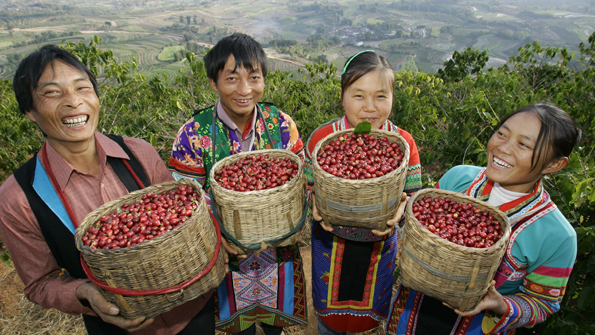
The green dream of Yunnan coffee is the only way to take intensive processing, and join the competition of international coffee giants.
Yunnan coffee was planted on a large scale in the mid-1950s, with a planting scale of 4000 hectares at one time. By the end of 1997, the planting area of coffee in the province had reached 7800 hectares. At present, the planting area of the province accounts for 70% of the national area, and the output accounts for 83% of the whole country. Yunnan coffee has established the dominant position in China in terms of planting area and coffee bean production. At present, Pu'er City is still there.

The road of Lincang coffee to take advantage of the best products has sprung up.
Lincang, which is located in the golden belt of coffee production in the world, its coffee industry is rapidly getting rid of the late start, and the latecomers are on the top. in 2013, the total coffee planting area in the city reached 554200 mu, ranking second in Yunnan Province.

A brief introduction to the Origin, Development, History and Culture of Katim Fine Coffee beans suitable for Deep Baking
Catimor: in 1959, the Portuguese mixed Brazilian Kaddura and Timo to develop a disease-resistant Katim / Katimo, which is now an important variety of commercial beans. Coffee is a short-day plant. Coffee has the characteristics of multiple flowering and concentrated florescence. The florescence of small seed coffee in Yunnan is 27 months, and the flowering period is 35 months. The flowering of coffee is affected by the climate, especially the rain

The rapid economic development has greatly increased the import and export sales of domestic and international coffee.
For professional cafes, the decoration must also be impeccable, Caffe Pascucci uses the artistic decoration style! Because Italy is the birthplace of the European Renaissance and the modern fashion capital, Italian art is everywhere. Specifically, the main colors of the store are black and red, symbolizing the richness of coffee and the enthusiasm of the Italian. Copper, isn't it?

2015 the coffee industry develops a golden era of becoming a barista.
In recent years, the development trend of boutique coffee has several obvious characteristics, the most important of which is that coffee shop owners pay more and more attention to the quality of coffee, the choice of equipment, and are fully aware of the importance of good baristas to coffee shops. Take you to understand the current situation of the coffee industry and the future development of the coffee industry, through the analysis of the operation of most cafes, foresee the future